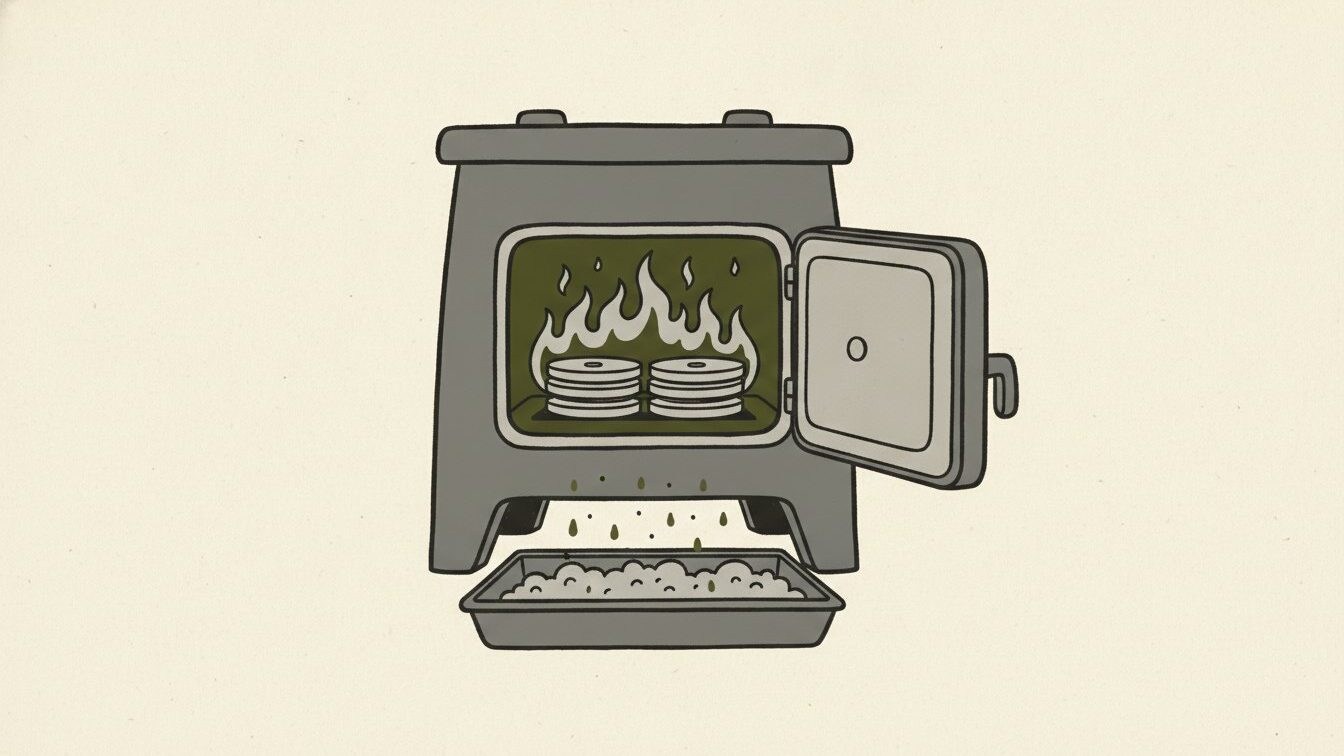
The claim class: a project states that a specific quantity of its token has been burned, permanently removed from circulating or total supply, usually to argue the remaining supply is scarcer than before.
Claim class: a pattern of statements, not one attributed, dated quote.
Receipt to pull The receipt is the burn transaction itself: a transfer of the stated quantity of tokens to a null or otherwise unspendable address, or a call to the contract's own burn function if it has one, visible on a block explorer with its own transaction hash, timestamp, and amount. No single receipt is linked: this piece explains how to check this kind of claim and does not grade one specific claim.
A confirmed burn transaction shows that specific quantity left active circulation at that specific time. It does not, on its own, confirm anything about the project's broader tokenomics claims, such as whether burns happen on a regular schedule as advertised, or whether an equal or larger amount was minted elsewhere around the same time, which would offset the scarcity effect being implied.
Not financial advice. The Crypto Online is a verification desk, not an accredited fact-checker.
A burn announcement is a claim about something that either happened on a public ledger or didn’t. Unlike most claims in this series, the receipt for a real burn is usually a single, specific transaction hash, which makes this one of the fastest checks in the whole series to run.
The Claim
The claim class: a project states that a specific quantity of its token has been burned, permanently removed from circulating or total supply, usually to argue the remaining supply is scarcer than before.
The Receipt
The receipt is the burn transaction itself: a transfer of the stated quantity of tokens to a null or otherwise unspendable address, or a call to the contract’s own burn function if it has one, visible on a block explorer with its own transaction hash, timestamp, and amount.
Burns happen in more than one technical form. Some tokens have a dedicated burn function that reduces totalSupply directly; others achieve the same economic effect by sending tokens to a conventional but unspendable address, in which case totalSupply itself does not change, but the tokens are, in practice, permanently out of circulation. The receipt needs to match the specific mechanism the project describes.
What It Doesn’t Prove
A confirmed burn transaction shows that specific quantity left active circulation at that specific time. It does not, on its own, confirm anything about the project’s broader tokenomics claims, such as whether burns happen on a regular schedule as advertised, or whether an equal or larger amount was minted elsewhere around the same time, which would offset the scarcity effect being implied.
How to Check It Yourself
- Find the specific transaction hash the project points to as evidence of the burn, rather than accepting a stated total with no linked transaction.
- Open that transaction on the relevant block explorer and confirm the quantity, the destination address, and the timestamp match the claim.
- Check whether the destination address is a genuinely unspendable address (such as the conventional null or dead address) rather than an address the project itself still controls.
- If the contract has a dedicated burn function, check whether totalSupply actually decreased by the claimed amount as a result.
- If a recurring burn schedule is claimed, check for a pattern of multiple such transactions over time rather than treating a single burn as proof of an ongoing mechanism.
- Check whether minting occurred elsewhere around the same period, since a burn can be fully real while being offset by issuance the announcement does not mention.
A Worked Example
A project tweets that it burned a large quantity of its token, with no transaction link attached. A reader searches the token’s own transfer history on the explorer for transfers of roughly that size to a conventionally unspendable address and finds a matching transaction at almost exactly the stated time, confirming the burn. The same reader also notices a mint of a similar size to a different wallet two days later, which does not undo the burn but does complicate the scarcity story built on top of it.
What Supported, Contradicted, and No Receipt Look Like
Supported: A specific transaction hash shows the claimed quantity sent to a genuinely unspendable address, or a contract burn function call that reduced totalSupply by the claimed amount, matching the announcement.
Contradicted: No transaction matching the claimed quantity and timing can be found, or the tokens were sent to an address the project itself still controls rather than a genuinely unspendable one, meaning they were not actually removed from circulation.
No receipt: No transaction hash or on-chain reference is given at all for the claimed burn, only a stated total with nothing linking it to the chain.
Red Flags
- A burn total is announced with no transaction hash or on-chain link provided anywhere.
- The destination address for the “burned” tokens is not a conventionally unspendable address and remains under the project’s own control.
- A recurring burn mechanism is advertised but only a single transaction has ever actually occurred.
- Minting activity around the same period roughly offsets the burned amount, undercutting the scarcity narrative attached to the burn.
- The claimed burned quantity, once checked, is smaller than stated in the transaction actually linked.
A Practical Complication to Expect
Some projects implement burns indirectly, for example by routing a portion of transaction fees to a burn address automatically through contract logic rather than through a single, large, manually triggered transaction. In that design, no single announcement-worthy transaction exists at all; instead, many small transfers accumulate at the burn address over time, and the correct way to verify a cumulative burn claim is to check that address’s total received balance rather than searching for one matching transaction. Readers should confirm which burn mechanism a given project actually uses before deciding whether a single-transaction search or a cumulative-balance check is the right way to verify a specific burn claim.
Why It Matters
A burn is one of the cleanest possible receipts in crypto: a single transaction either exists with the right destination and amount, or it does not. That precision is exactly why it is worth checking directly rather than taking a round, announcement-friendly number at face value. A burn claim is also worth separating from a burn mechanism that is merely proposed or planned for a future date; a governance post describing an intended future burn is a statement of intent, not yet a receipt, and only becomes checkable once the actual transaction has occurred and can be found on-chain.
FAQ
What makes an address “unspendable” rather than just unused?
A genuinely unspendable address, like the conventional null address, has no known private key that could ever sign a transaction moving tokens out of it. An address the project merely says it will not use is a promise, not a technical guarantee.
Does burning tokens guarantee the price will rise?
No. Supply is only one factor among many that affect price, and a burn’s scarcity effect can be offset by demand changes or by minting elsewhere; a confirmed burn is a fact about supply, not a prediction about price.
Can a burn be reversed?
Sending tokens to a genuinely unspendable address is, for practical purposes, permanent. A burn achieved by moving tokens to an address the project still controls is not actually permanent and is a different, weaker claim than true removal from circulation.
Why would totalSupply not change even after a real burn?
If the mechanism used is sending tokens to an unspendable address rather than calling a dedicated burn function, the contract’s totalSupply figure may stay the same even though those tokens are, in practice, gone from active circulation; checking the destination address directly is what actually matters.
Does it matter who actually initiated the burn transaction?
Yes; a burn initiated from an address already identified as the project’s own treasury or team wallet is a more straightforward confirmation than one sent from an unfamiliar address merely claimed, after the fact, to belong to the project. Where the sending address has not been independently tied to the project through a signed message or prior disclosed activity, the burn transaction itself is still real and checkable, but the claim that it was the project’s own deliberate action carries an extra, separately checkable assumption worth noting.
Not financial advice. The Crypto Online is a verification desk, not an accredited fact-checker; we describe how a claim like this can be checked, never whether to buy, sell, or hold anything on the back of it.
Sources
This piece links no outside source: it explains a class of claim and the public records you would check, rather than grading one specific statement. When a specific claim is checked, every source link is listed here with its status.
Not financial advice. Human-edited; AI-assisted drafting is disclosed in our editorial guidelines. Spotted an error? See how corrections work.