
XRP and Ripple remain two of the most discussed entities in the cryptocurrency world, attracting both institutional attention and retail speculation. With real-time price swings, high-profile legal proceedings, and ongoing partnerships with banks and fintech companies, today’s XRP Ripple news is integral for traders, analysts, and industry observers. As the crypto landscape pivots through regulatory waves and technological innovation, Ripple’s position—bridging traditional finance and blockchain—is under intense scrutiny.
Ripple and XRP: Recent Developments Shaping 2024
Ongoing Legal Saga: SEC v. Ripple
Arguably the most impactful XRP news today revolves around Ripple’s legal battle with the U.S. Securities and Exchange Commission (SEC). The SEC’s case—alleging that Ripple’s XRP sales were unregistered securities offerings—has spanned several years, creating volatility in XRP’s price and uncertainty for holders.
While the court has delivered partial rulings, notably a 2023 decision that XRP itself is not a security in secondary market sales, portions of the case are still unresolved. This legal cloud has tempered some mainstream financial adoption, though many in the crypto community interpret recent judgments as steps toward regulatory clarity.
“Regulatory outcomes for XRP will set a precedent for digital assets across the U.S. market. Every court development in SEC v. Ripple draws global attention,” says Amy Li, fintech legal analyst at Digital Asset Insights.
Expanding Partnerships & Use Cases
Despite legal uncertainty, Ripple’s enterprise solutions continue to gain traction globally. RippleNet, the company’s distributed ledger-based payments network, has been adopted by a growing roster of banks and remittance providers seeking faster, lower-cost international transfers.
Recent months have seen Ripple announce or expand partnerships in regions such as the Middle East and Asia-Pacific, where demand for cross-border payments is surging. Ripple’s On-Demand Liquidity (ODL) service, powered by XRP, now underpins significant transaction volumes between financial institutions in corridors like the Philippines, Mexico, and the UAE.
Market Position and Recent Price Action
In 2024, XRP remains a top-10 cryptocurrency by market capitalization, even as its price shows the effects of broader market sentiment and regulatory news. Historically, XRP’s price has been sensitive to developments in the Ripple-SEC case, news of major partnerships, and the overall movement of flagship coins like Bitcoin and Ethereum.
Recently, XRP has demonstrated a pattern of sharp, short-term gains following positive news—such as rumored settlement talks—followed by corrections as the broader market absorbs updates and speculation cools.
XRP Price Predictions: What Do Analysts Forecast?
Technical Analysis of XRP Trends
Crypto analysts are divided on XRP’s short-to-medium term price prospects. Technical indicators—such as Relative Strength Index (RSI), moving averages, and trading volume—are closely watched for signals of momentum or reversal.
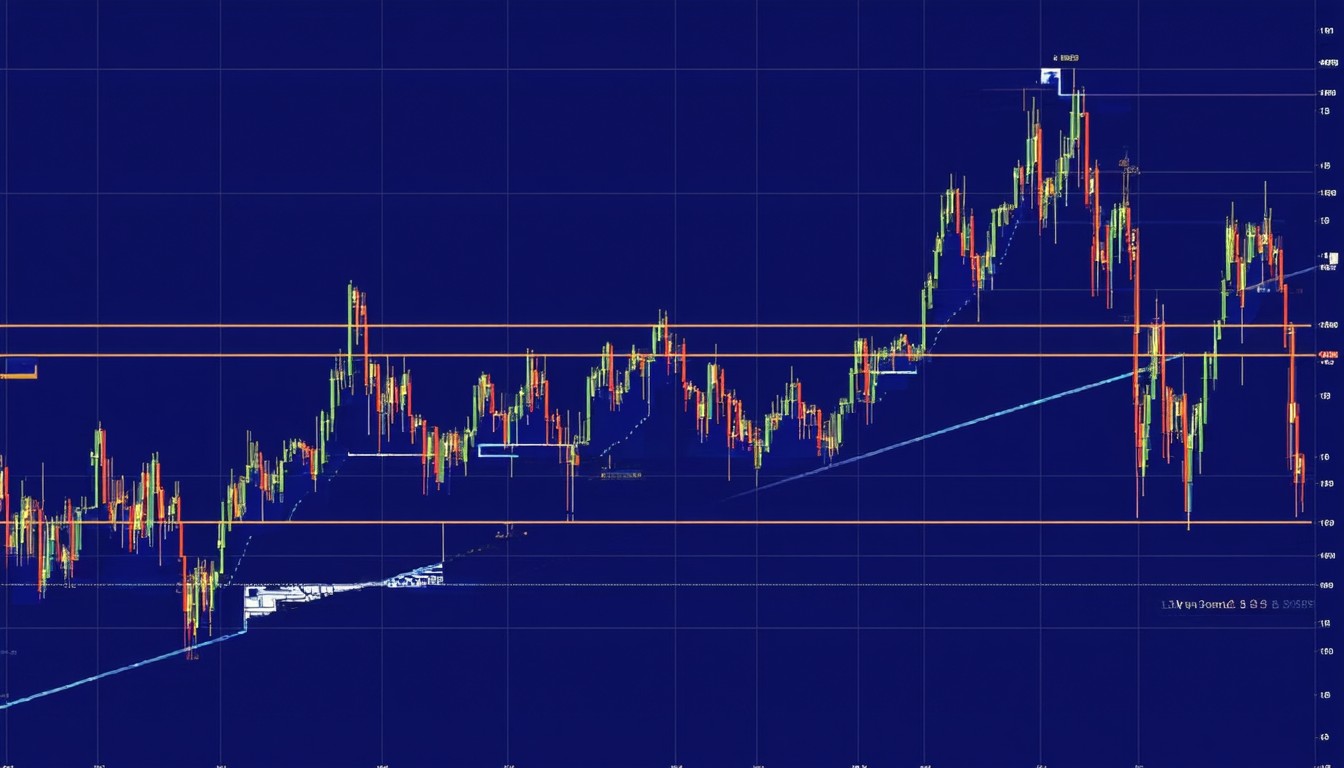
- Support & Resistance Zones: XRP has consistently found support in the $0.40–$0.50 range in recent months, with resistance levels appearing near $0.70 and $0.80.
- Volatility Drivers: Unexpected legal filings, regulatory commentary, or institutional adoption news can spark volatility, emphasizing the importance of active monitoring for traders.
Expert Commentary and Caution
Leading analysts note that, given ongoing litigation, XRP price forecasts tend to be more volatile than for other established cryptocurrencies.
“XRP’s upside is tied not only to market trends, but also to any clarity from U.S. regulators. Traders should approach short-term predictions with caution,” observes Jonas Müller, senior market strategist at CryptoFund Intelligence.

Longer-Term Potential: Utility and Adoption
Over the longer horizon, some industry observers believe that Ripple’s ability to onboard banking institutions, provide settlement services, and facilitate cross-border transfers could support higher valuations for XRP—assuming regulatory hurdles are resolved satisfactorily.
However, competition from stablecoins, Central Bank Digital Currencies (CBDCs), and other blockchain payment solutions remains a risk factor for Ripple’s dominance.
Ripple’s Technology: Real-World Applications and Industry Trends
Cross-Border Payments Revolution
Ripple’s core mission is simplifying and accelerating cross-border payments, which still suffer from legacy friction, high fees, and slow settlements. Through RippleNet and the use of XRP as a bridge currency in ODL transactions, Ripple aims to resolve long-standing pain points in international finance.
Several major institutions—including global remittance firms and regional banks—have tested or fully integrated Ripple’s technology. In emerging markets, where fast, affordable cross-border payments are crucial for remittances and trade finance, Ripple has found fertile ground.
Competing Solutions and Market Forces
Despite Ripple’s traction, the cross-border payments space is increasingly competitive. Global stablecoins (like USDC), new blockchain solutions, and ongoing progress in traditional systems (such as SWIFT’s modernization) all vie for market share.
Nonetheless, many industry voices argue that Ripple’s technological maturity and business development acumen give it a unique position within the digital asset ecosystem, especially if it can resolve outstanding regulatory issues in major jurisdictions.
How Global Regulation Shapes XRP and Ripple’s Future
The Ripple Effect of Policy Uncertainty
Across global markets, digital assets face a fragmented and evolving regulatory environment. The outcome of Ripple’s U.S. court case is seen as a bellwether for how tokens will be classified and regulated nationally—and potentially, internationally.
Some jurisdictions in Europe and Asia-Pacific have issued more crypto-friendly frameworks, leading to accelerated Ripple adoption outside the United States. U.S. policy, meanwhile, remains in flux, with significant implications for innovation and capital flows.
Key Watchpoints for XRP Investors
- Court Rulings: Final outcomes and possible settlements in the SEC case.
- Legislative Developments: Movement on U.S. crypto bills or clarification of the SEC/CFTC’s jurisdiction.
- Global Partnerships: Expansion into new corridors and sectors.
- Competitive Innovations: How well Ripple’s tech adapts relative to rising challengers.
Conclusion: The Current and Future Pulse of XRP Ripple
In today’s fast-shifting crypto environment, XRP and Ripple remain both controversial and dynamic. New developments in Ripple’s legal battle and enterprise adoption continuously shape the digital asset’s momentum. While legal and regulatory risks remain, Ripple’s ongoing efforts to anchor its technology in real-world payment corridors suggest the company is positioned to play a major role in the future of digital finance—provided it navigates both competition and compliance successfully.
For investors and industry participants, tracking XRP Ripple news today is crucial—offering both opportunity and complexity as the digital asset space matures.
FAQs
What is the latest news on the SEC lawsuit against Ripple?
Recent court decisions have favored Ripple in important ways, but not all issues are resolved. The outcome continues to influence XRP’s price and regulatory treatment in the U.S.
How has XRP’s price been affected by recent events?
XRP’s price often reacts sharply to legal updates, major partnerships, and broader crypto market movements. Price volatility tends to be higher than for many similarly established coins.
What is RippleNet and why does it matter?
RippleNet is Ripple’s global payments network, designed to enable fast, low-cost international transactions between banks and financial institutions. Its growing adoption is key to Ripple’s business strategy.
Are major banks using Ripple or XRP right now?
Several international banks and remittance firms have piloted or implemented Ripple’s technology, particularly for cross-border settlements in select regions. Use of XRP itself as a bridge currency varies among partners.
What are analysts saying about XRP price predictions?
Most analysts agree that XRP’s near-term price direction is closely tied to legal and regulatory developments. Long-term forecasts depend on Ripple’s continued ability to drive adoption.
How do regulations outside the U.S. impact Ripple and XRP?
Many countries in Europe and Asia-Pacific have embraced clearer rules for digital assets, helping Ripple expand partnerships abroad even as U.S. uncertainty persists. Global regulation continues to be a key factor shaping XRP’s future.