
Ethereum remains one of the most influential cryptocurrencies globally, shaping not only the digital asset landscape but also broader financial markets. While Bitcoin continues to dominate headlines, the Ethereum price in USD has become a critical reference for everyone from institutional investors to independent developers. Amid volatile swings, regulatory shifts, and rapid technological advancement, Ethereum (ETH) reflects both the promise and complexity of a decentralized financial future.
Ethereum’s live ETH to USD exchange rate is followed by millions daily. Its value impacts decentralized applications (dApps), DeFi protocols, and even the growing world of NFTs. Understanding the forces behind ETH’s USD valuation requires analyzing its unique market mechanics, real-world use cases, and ongoing development.
Key Factors Influencing Ethereum Price (USD)
Ethereum’s USD price is shaped by a confluence of internal protocols and external market forces. These include:
- Supply and Demand Dynamics: With the shift to Ethereum 2.0 and the transition from proof-of-work to proof-of-stake, ETH’s circulating supply changes, potentially impacting scarcity and price.
- Network Activity: Massive adoption in DeFi and NFTs has boosted transaction volumes, driving up demand for ETH as transaction “gas.”
- Regulatory Developments: Crypto regulation, especially in the U.S. and European Union, can dramatically impact market sentiment and investment flows.
For example, in September 2022, the Ethereum “Merge” event fundamentally changed its consensus mechanism. This transformation led many analysts to debate its effects on both ETH’s security and its long-term supply-behavior.
“Ethereum’s move to proof-of-stake marked a turning point not just for environmental sustainability, but also for scarcity mechanics. The reduction in net ETH issuance is a supply-side shock few traditional assets ever experience,” notes crypto analyst Michael Nadeau.
Macroeconomic Factors: USD Fluctuations and Risk Trends
ETH’s price in USD is also correlated with macroeconomic trends. As the dollar strengthens, cryptocurrencies often face downward pressure. Conversely, when risk appetite is high in global markets, Ethereum sees renewed capital inflows. In 2021, for instance, ETH outpaced many traditional assets as investors sought alternatives amid loose monetary policy.
Competition and Ecosystem Growth
Ethereum faces rising competition from other smart contract platforms like Solana and Avalanche. Yet, Ethereum’s “network effect”—its enormous base of developers and dApps—remains a potent force stabilizing and lifting its USD valuation.
Real-Time ETH to USD: How the Exchange Rate Is Determined
Ethereum’s live exchange rate against the dollar is established by trading activity on dozens of global exchanges. The rate may slightly differ between platforms depending on liquidity, order book depth, and real-time trades.
Key Platforms and Price Aggregators
- Centralized Exchanges: Platforms such as Coinbase, Binance, and Kraken provide deep liquidity and fast execution, helping set benchmark prices.
- Decentralized Exchanges (DEXs): Uniswap and Curve are prominent for ETH vs. stablecoin pairs, offering price discovery without centralized intermediaries.
- Price Oracles and Aggregators: Services like Chainlink, CoinGecko, and CoinMarketCap track and publish aggregate ETH-USD rates, factoring in order book depth and outlier price discrepancies.
Example: Volatility Spikes
During periods of high network congestion or breaking news, discrepancies between different ETH-USD prices are common. Traders may exploit these gaps via arbitrage, quickly balancing rates across the ecosystem.
Ethereum Market Analysis: Trends, Volatility, and Historical Context
Historical Price Patterns
ETH debuted in 2015 at a modest price before experiencing parabolic growth in the subsequent years. 2017 saw the initial surge driven by ICO mania, and a rapid fall followed as the bubble burst in 2018. The next notable price epoch aligned with the emergence of decentralized finance in 2020 and 2021, when Ethereum repeatedly set new all-time highs.
- Volatility: Ethereum is inherently volatile compared to traditional assets, often moving double-digits in mere hours.
- Seasonality: ETH frequently exhibits cyclical patterns, with bullish activity often peaking in spring and fall.
Institutional and Retail Adoption
The increasing entry of institutional capital—from ETFs and funds to direct balance sheet allocation—has deepened ETH’s market. Additionally, widespread retail speculation, particularly through platforms like Robinhood and eToro, fuels swings.
DeFi, NFTs, and Real-World Utility
Ethereum underpins the booming DeFi sector, enabling lending, swaps, and insurance protocols that move billions in value. It’s also the foundational layer for NFTs, creating a robust use-case network that anchors demand for ETH.
Case Study: NFT Mania and Price Spikes
In early 2021, NFT sales on Ethereum reached unprecedented heights, momentarily congesting the network and causing gas fees—and ETH demand—to spike dramatically. While NFT speculation has cooled, such surges tie Ethereum’s USD price closely to innovation cycles.
Ethereum vs. Bitcoin: Comparing USD Price Dynamics
While both assets are leaders, their price movement mechanisms differ.
- Utility vs. Store of Value: Ethereum’s price is tied to transactional utility and smart contract execution, while Bitcoin’s value is largely driven by perceptions as “digital gold.”
- Supply Mechanics: Bitcoin’s capped supply enforces scarcity, but Ethereum’s EIP-1559 fee burn mechanism and proof-of-stake validator rewards actively modify supply, impacting price over time.
- Volatility: Both are volatile, but ETH’s role in hosting a vast ecosystem leads it to sometimes outpace BTC in both gains and losses.
Correlation Trends
Over time, ETH and BTC prices have shown strong—but not perfect—correlation. Market shocks or technological developments can decouple short-term price action.
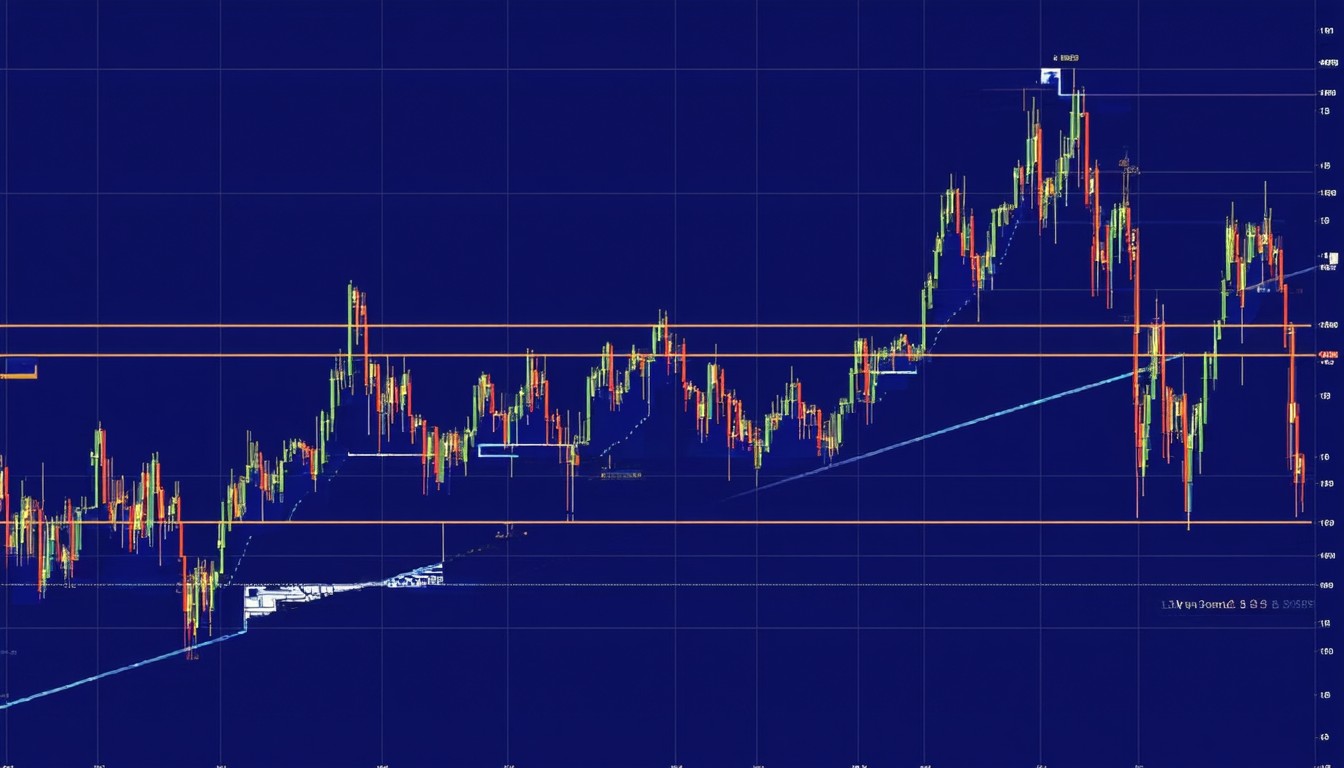
Technical Analysis: What Chart Patterns Say About ETH/USD
Technical analysis (TA) is widely used among traders and market watchers to forecast Ethereum’s price direction. Common indicators include:
- Moving Averages: Traders watch 50-day and 200-day moving averages for momentum shifts.
- Relative Strength Index (RSI): Signals if ETH is “overbought” or “oversold.”
- Support and Resistance Levels: Frequent reversals at round-number USD marks (e.g., $2,000, $3,000) offer actionable signals.
Example: Breakout Patterns
ETH/USD often forms consolidating “triangles” or “flags” before explosive breakouts or breakdowns, a pattern seen repeatedly over the past several years.
Risks, Opportunities, and the Future of Ethereum Pricing
Risks for Investors
- Network Congestion: High usage can lead to prohibitive fees, pushing users to alternate blockchains.
- Security Vulnerabilities: Smart contract bugs have led to significant losses; ongoing audits and improvements aim to alleviate this risk.
- Regulatory Headwinds: Potential classification as a security in some jurisdictions could radically alter its market standing.
- Market Sentiment: “Crypto winters” driven by sentiment often depress ETH prices far below its fundamental value, at least temporarily.
Long-Term Opportunities
- The upcoming “danksharding” and further scalability upgrades promise to lift network capacity and potentially boost adoption.
- Real-world enterprise and government use of Ethereum (e.g., for CBDCs or supply-chain verification) is steadily increasing.
- As DeFi matures, ETH could further solidify its role as the backbone of “Web3” finance.
Conclusion: Navigating Ethereum’s USD Price Cycle
The Ethereum price in USD is more than just a number on a screen; it’s a real-time reflection of innovation, adoption, and evolving market psychology. As the ecosystem remains at the forefront of blockchain innovation, both risks and opportunities abound. For investors and developers alike, monitoring ETH’s USD exchange rate and associated market signals remains essential.
Ultimately, Ethereum’s journey is defined not only by its price, but by its growing impact on how value and information move in a digital world.
FAQs
What determines the live ETH to USD exchange rate?
The ETH/USD rate is set through trading activity on global crypto exchanges, influenced by liquidity, order book depth, and real-time supply-demand dynamics.
How volatile is Ethereum compared to other cryptocurrencies?
Ethereum is highly volatile, often experiencing double-digit percentage swings within short timeframes, though its volatility tends to decrease as market liquidity rises.
Why does Ethereum’s price often differ between exchanges?
Exchange-specific liquidity, temporary demand spikes, and fees can cause small discrepancies in ETH/USD prices until arbitrage aligns them.
What roles do DeFi and NFTs play in Ethereum’s price?
DeFi and NFT activity create real economic demand for ETH, both as a transactional medium (“gas”) and as collateral, intensifying price cycles during periods of rapid adoption.
How does regulatory news impact the ETH to USD value?
Major regulatory announcements—positive or negative—can trigger significant ETH price movements, as they affect overall confidence and institutional participation in the market.
Can Ethereum’s price keep rising as other blockchains emerge?
Competition is strong, but Ethereum’s established network, ongoing upgrades, and extensive developer ecosystem position it well for continued relevance—though market leadership is never guaranteed.